
A backhoe loader is one of the most versatile machines in construction, agriculture, road maintenance and municipal projects. It combines a front loader bucket and a rear digging arm in one machine, allowing operators to dig, load, lift, trench, backfill and move materials without switching between several machines.
For contractors, rental companies, equipment dealers and project buyers, a backhoe loader is often a practical choice when the job requires both excavation and loading. Some buyers also call it a backhoe wheel loader, while smaller models may be searched as a mini backhoe and loader for farms, small construction sites and compact working areas.
As a construction machinery supplier in China, we focus on excavators, wheel loaders, skid steer loaders, backhoe loaders, attachments and spare parts. We help customers choose suitable models according to working conditions, budget, engine requirements, attachment needs and local market demand.
Main Parts of a Backhoe Loader
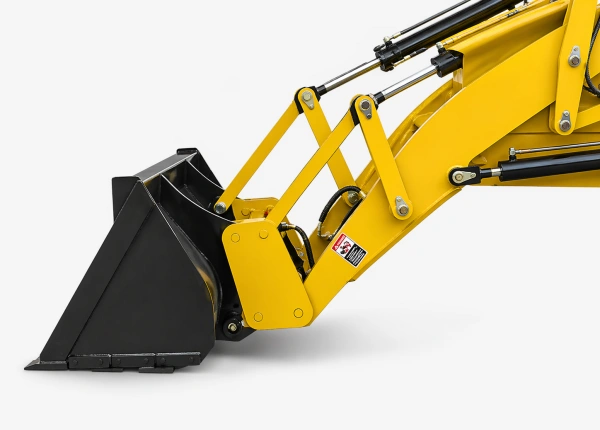
Front Loader Bucket
The front loader bucket is one of the most important working parts of a backhoe loader. It is used for loading, lifting, pushing, leveling and moving materials.
For example, the front bucket can load sand, gravel, soil, fertilizer, construction debris or agricultural materials. Depending on the model, bucket size and lifting capacity can vary. Buyers should choose the bucket capacity according to material density, working space and loading height.
For customers comparing a backhoe wheel loader with a standard wheel loader, the key difference is that the backhoe loader offers both front loading and rear digging functions.
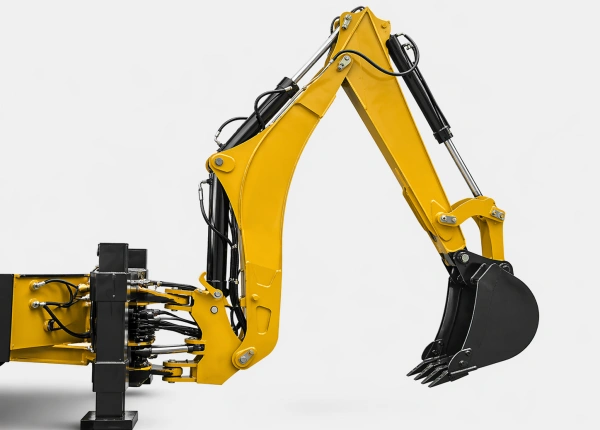
Rear Backhoe
The rear backhoe gives the backhoe loader its digging ability. It can dig trenches, drainage lines, small foundations, cable channels and pipe installation areas.
For farm users, the rear backhoe can help with ditch digging, water drainage, fence post preparation and small land improvement work. For contractors, it is useful for road repair, site preparation and utility projects.
Some models can also work with different rear attachments, depending on the hydraulic system and machine configuration.
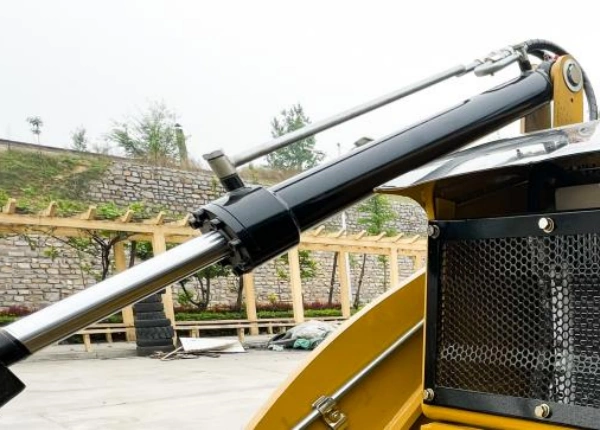
Engine and Hydraulic System
A reliable engine and hydraulic system are essential for a good backhoe loader. Engine power affects travel speed, climbing ability, loading efficiency and overall working performance. The hydraulic system affects digging force, lifting movement, attachment response and operation smoothness.
Our backhoe loader models can be configured according to different working requirements. The product range includes options with brand engines, stable power output and hydraulic systems designed for smooth operation.
Before shipment, we can provide machine photos, test videos and inspection details to help customers confirm the machine condition.
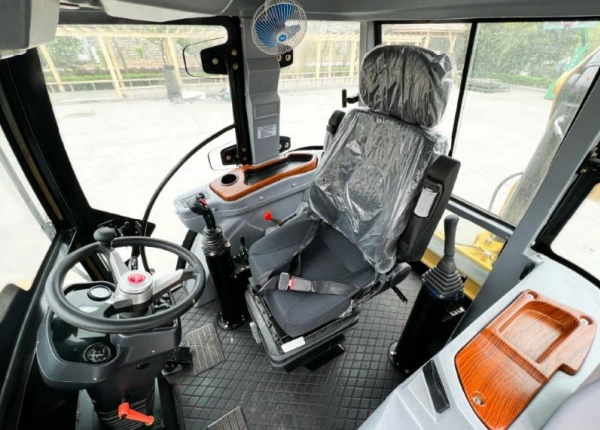
Cab and Control System
The cab affects operator comfort, visibility and working efficiency. A comfortable cab is especially important for long working hours. Some backhoe loader models are available with canopy or enclosed cabin options.
For many buyers, a better cab means better visibility, safer operation and easier control.
Features such as LED working lights, clear visibility, ergonomic controls and stable support legs can improve the working experience on job sites.
The front loader bucket is one of the most important working parts of a backhoe loader. It is used for loading, lifting, pushing, leveling and moving materials.
For example, the front bucket can load sand, gravel, soil, fertilizer, construction debris or agricultural materials. Depending on the model, bucket size and lifting capacity can vary. Buyers should choose the bucket capacity according to material density, working space and loading height.
For customers comparing a backhoe wheel loader with a standard wheel loader, the key difference is that the backhoe loader offers both front loading and rear digging functions.
What Is a Backhoe Loader Used For?
A backhoe loader is used for jobs that require both digging and loading. It is especially suitable for projects where one machine needs to complete several tasks.
Common uses include:
- Digging trenches for pipes, cables and drainage
- Loading sand, gravel, soil and construction materials
- Cleaning and leveling construction sites
- Farm drainage and agricultural material handling
- Road maintenance and small municipal projects
- Landscaping, land preparation and backfilling
- Utility repair and foundation digging
For dealers and rental companies, a backhoe loader is also attractive because it can serve many customer groups. One customer may use it for road repair, while another may use it for farm work or small building projects.
Backhoe Loader vs Excavator
A backhoe loader and an excavator can both dig, but they are not the same.
An excavator is usually better for deeper excavation, heavy earthmoving and continuous digging work. It has stronger specialized digging ability, especially in large construction or mining projects.
A backhoe loader, however, is more flexible for mixed jobs. It can dig with the rear arm and load materials with the front bucket. It also moves easily between nearby job sites because most models are wheeled.
Choose an excavator if your main work is deep excavation. Choose a backhoe loader if your work includes digging, loading, moving materials and general site support.
Backhoe Loader vs Wheel Loader
A wheel loader is mainly designed for loading, lifting and material handling. It is a better choice when the job is focused on moving large volumes of material.
A backhoe loader is different because it combines loading and digging. It may not replace a large wheel loader for heavy loading work, but it is more versatile for contractors who need both front bucket work and rear excavation.
This is why some buyers search for a backhoe wheel loader when they are looking for a wheeled machine that can load and dig. In many small and medium projects, a backhoe loader provides a practical balance between loading ability and excavation function.
Common Attachments for Backhoe Loaders
Attachments can greatly expand the working range of a backhoe loader. With suitable attachments, one machine can handle more job types.
Common attachments include:
For example, a hydraulic breaker can be used for concrete breaking and road repair. An auger can be used for drilling holes for fencing, poles and farm construction. Pallet forks can help move materials on farms, yards and construction sites.
When choosing attachments for a backhoe loader, buyers should confirm hydraulic flow, machine weight, mounting type and working conditions.
Advantages of a Backhoe Loader
The biggest advantage of a backhoe loader is versatility. It can dig, load, lift, backfill and move materials with one machine.
For buyers with limited equipment budgets, a backhoe loader can reduce the need to purchase both a separate excavator and loader. For rental companies, it can serve more customer needs. For dealers, it is easier to promote because the machine fits many applications.
Other advantages include:
- Front loading and rear digging in one machine
- Suitable for construction, farm and municipal work
- Easier movement between nearby job sites
- Compatible with different attachments
- Practical for small and medium projects
- Good choice for mixed working conditions
Our backhoe loader product range also supports different configurations, including engine options, buckets, tires, cabins and attachments. This helps buyers match the machine with local market demand.
Limitations of a Backhoe Loader
A backhoe loader is versatile, but it is not perfect for every job.
If the project requires very deep excavation, a dedicated excavator may be more suitable. If the work is mainly heavy loading in a quarry or large material yard, a wheel loader may be more efficient.
A backhoe loader may also have limits in very narrow spaces, depending on machine size and turning radius. Before buying, customers should check working space, digging depth, loading height, ground conditions and transport requirements.
Understanding these limits helps buyers avoid choosing the wrong machine.
How to Choose the Right Backhoe Loader
Choosing the right backhoe loader depends on the real working conditions, not only the price.
Before purchase, buyers should confirm:
- Main application: construction, farm, road or municipal work
- Required digging depth
- Required loading capacity
- Engine power and emission requirements
- Bucket capacity and bucket width
- Tire type and ground conditions
- Cabin or canopy preference
- Attachment requirements
- Spare parts and after-sales support
- Shipping method and export documents
The backhoe loader cost can vary depending on model size, engine configuration, hydraulic system, bucket capacity, cabin type, attachments, order quantity and destination country. Instead of only asking for the lowest backhoe loader cost, buyers should compare machine configuration, inspection support, spare parts supply and long-term service.
We work with selected manufacturing partners and help customers confirm product selection, configuration, pre-shipment inspection, export documents and delivery support.
Is a Backhoe Loader Right for Your Business?
A backhoe loader is suitable for buyers who need one machine for several types of work. It is especially useful for:
- Equipment dealers
- Construction contractors
- Rental companies
- Agricultural users
- Municipal project buyers
- Road maintenance teams
- Small mining support projects
A mini backhoe and loader may be suitable for farms, landscaping, narrow roads and small construction jobs. Larger models are more suitable for heavier loading, deeper digging and higher working intensity.
If your customers need both digging and loading ability, a backhoe loader is worth considering. If your market mainly needs only deep excavation or only heavy loading, then an excavator or wheel loader may be better.
FAQ About Backhoe Loaders
How do I choose the right backhoe loader for my project?
Choose according to working conditions, digging depth, bucket capacity, engine power, lifting height, jobsite space and budget. If you are not sure which backhoe loader is suitable, you can provide your application, material type, daily working hours and local requirements.
Can the backhoe loader be customized?
Yes. A backhoe loader can often be configured with different engines, buckets, tires, cabins and attachments. Common attachment options include hydraulic breakers, augers, grapples, pallet forks and different buckets.
What inspections are carried out before delivery?
Before delivery, we can check the appearance, engine operation, hydraulic system, electrical system, braking and steering, oil leakage and basic operating functions. Photos, videos and inspection details can be provided before shipment.
Do you provide spare parts and after-sales support?
Yes. We can provide spare parts support for common wearing parts and key components, such as filters, hoses, hydraulic parts, engine parts, electrical parts and bucket teeth. Support can be provided through photos, videos, remote guidance, manuals and parts supply.
How long does production and delivery take?
Delivery time depends on model, stock, customization, order quantity and destination. Standard models with stock can usually be arranged faster, while customized or bulk orders need more preparation time.
Can you arrange shipping and export documents?
Yes. We can help arrange sea transport, land transport or multimodal transport according to customer needs. Common export documents include commercial invoice, packing list, bill of lading, certificate of origin and other required documents.
Conclusion
A backhoe loader is a practical and versatile machine for buyers who need digging, loading, lifting and material handling in one unit. It is widely used in construction, agriculture, road maintenance, landscaping, municipal work and rental markets.
Compared with a dedicated excavator or wheel loader, a backhoe loader is not always the strongest in one single function, but it offers excellent flexibility for mixed working conditions. For many dealers, contractors and project buyers, this balance makes the backhoe loader a valuable machine to add to their equipment lineup.
If you are comparing backhoe loader cost, model size, attachments or shipping options, you can send us your working conditions, required digging depth, loading needs, engine preference and budget range. We can help you compare suitable configurations and confirm machine details before shipment.